What Is Sales Outreach? Channels, Cadences, and Best Practices
Sales outreach explained for B2B practitioners: how to choose channels, build a cadence, coordinate multichannel sequences, and automate without sounding like a robot.
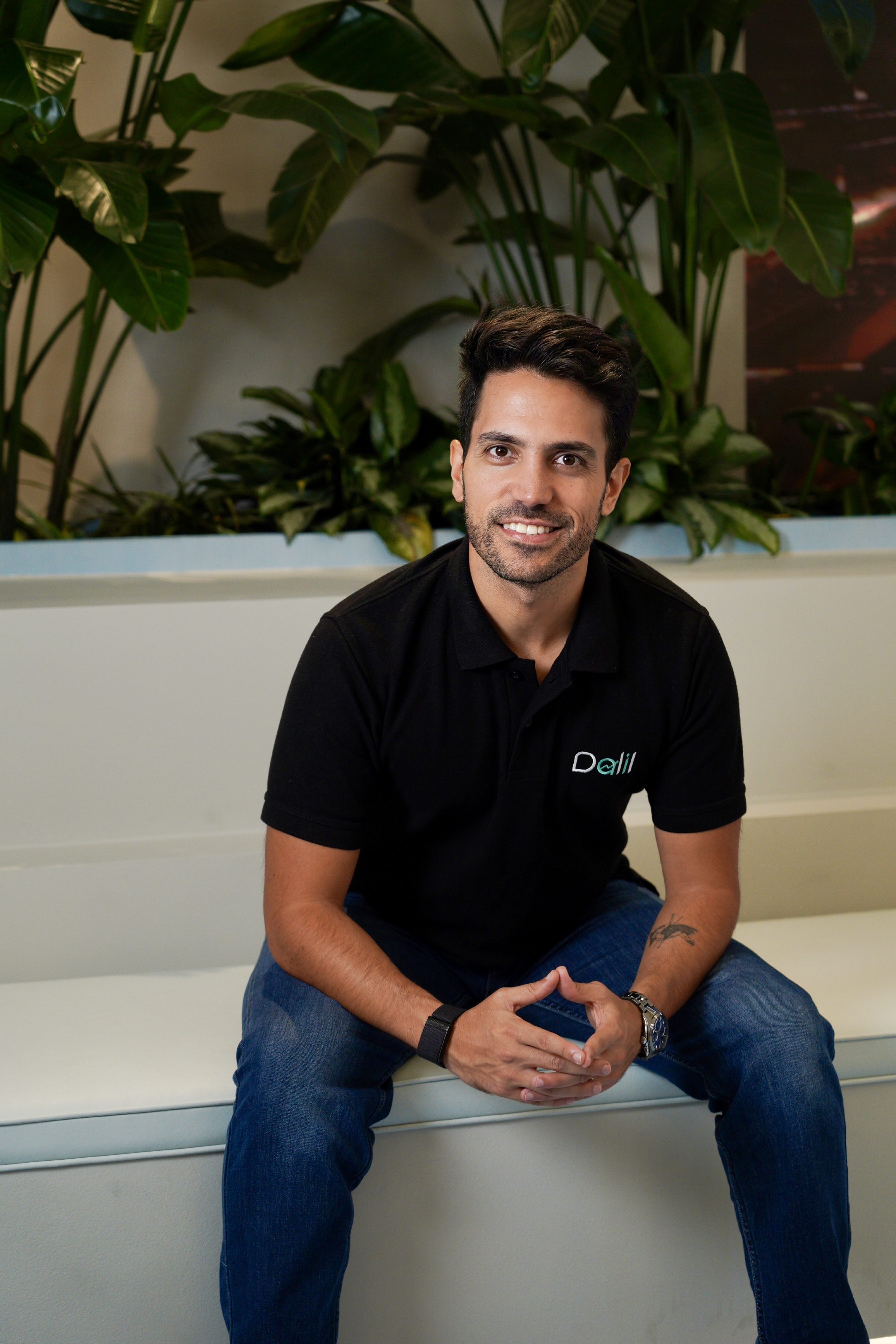
What Is Sales Outreach? Channels, Cadences, and Best Practices
Sales Outreach Defined
Sales outreach is the process of initiating contact with potential customers, either to start a conversation or to move an existing one forward. It covers every deliberate action a rep takes to reach a prospect: sending an email, requesting a LinkedIn connection, dropping a WhatsApp message, making a phone call, or any combination of those across a structured sequence of touches.
The word "outreach" sometimes gets conflated with "prospecting," but they're not quite the same thing. Prospecting is identifying who you want to talk to. Outreach is the act of actually reaching out. One is research; the other is execution.
Where it gets interesting for most B2B teams is that outreach no longer means picking up the phone or firing off a single cold email. Modern outreach is multichannel, often automated in parts, and designed to deliver a consistent message across multiple touchpoints before expecting a reply. Done well, it feels like a natural progression of communication. Done poorly, it feels like a robot found your email address.
The fundamentals are straightforward enough: identify who you're targeting, decide how and when to reach them, execute across a planned sequence, and iterate based on what's actually working. The complications live in the execution.
The Main Outreach Channels: Email, LinkedIn, WhatsApp, Phone
Most B2B outreach happens across four channels. Each one has a distinct character, and the teams that understand those differences build better outreach than the ones who treat all four as interchangeable.
Email remains the default starting point for most B2B outreach. It's asynchronous, documented, and easy to scale. The downside is that inboxes are saturated. Decision-makers at mid-to-large companies receive dozens of cold emails weekly, and most are ignored. Email works best when it's specific, short, and clearly relevant to something the prospect is actually dealing with. It's a terrible channel for vague value propositions.
LinkedIn has become the most valuable channel for B2B outreach over the last five years, mostly because it combines professional context with direct messaging. You can see a prospect's role, what they post about, who they know in common, and what they've been paying attention to. That context makes genuine personalization possible in a way that a scraped email list can't support. The constraint is connection limits and the growing awareness among buyers that LinkedIn inboxes are filling up with templates.
WhatsApp is underused in B2B outreach in Western markets and significantly overused in parts of the Middle East, Southern Europe, and Latin America. The channel distinction matters because WhatsApp sits in a different mental space for most people. It's where they talk to friends and family, which means a professional message there either reads as impressively direct or invasively personal depending on how it's done. When it works, it works extremely well. Open rates are substantially higher than email. Reply rates follow.
Phone is the oldest channel and still one of the most effective for certain buyer types and industries. The problem is that cold calling at volume is expensive and hard to scale without dedicated SDRs. It's also the channel with the highest variance: a great call moves deals faster than any other touchpoint, and a bad one can permanently close a door. Most teams use phone as a secondary touchpoint in a sequence rather than the primary entry point.
No single channel dominates across all buyer types and industries. Which channel you lead with should depend on where your specific buyers spend their professional attention, not on what's easiest for you to automate.
What Is a Sales Cadence and How to Build One
A sales cadence is the structured sequence of outreach touchpoints, timed across specific intervals, that a rep follows when working a prospect. It's the answer to "when do I reach out, how many times, and through which channel?" without leaving that to individual judgment.
Without a cadence, reps default to their instincts. Some follow up too aggressively and burn goodwill. Others stop after two emails because they don't want to be annoying. Neither approach produces consistent results. A cadence removes that variability by giving every rep the same playbook for a given prospect type.
Building a cadence involves four decisions.
Stage 1: Define the target and intent. A cadence for a cold inbound lead from a webinar is different from one for a completely cold account you identified from a signals list. The sequence length, tone, and channel mix should reflect what you already know about the prospect and how warm they are.
Stage 2: Choose your channels and order. Most effective B2B cadences use 2-3 channels. A common structure for cold outreach: LinkedIn connection request on day 1, email on day 3, LinkedIn message on day 6, email on day 10, phone on day 14. The channel order can vary, but there's usually logic to starting on LinkedIn because it gives the prospect a chance to see your profile before the email arrives.
Stage 3: Set the timing and spacing. A cadence that front-loads 5 touches in 3 days reads as desperate. One that spaces 8 touches across 60 days risks the prospect forgetting the earlier touches entirely. For cold outreach, 8-12 touchpoints across 21-30 days is a reasonable range for most B2B products with deal cycles over $10K. Shorter cycles can move faster. Enterprise cycles should probably run longer.
Stage 4: Write the messaging framework. Each touchpoint needs a distinct angle. If every email says roughly the same thing with different subject lines, the prospect tunes out after the second one. A properly built cadence escalates: first touch establishes relevance, second provides social proof or a case study, third creates mild urgency, fourth is a straightforward ask or break-up message.
Why Single-Channel Outreach Fails: The Case for Multichannel
Running all your outreach through one channel is not a conservative strategy. It's a structural disadvantage.
When you only send email, you're competing for attention in the most crowded channel in B2B. When you only use LinkedIn, you're capped by message limits and connection acceptance rates. When you only call, you're bottlenecked by time and headcount. Each channel has its own ceiling, and hitting that ceiling with nothing else in the sequence means you've exhausted your opportunities with a prospect who might have responded differently to a different format.
The deeper problem is that buyers don't live in one channel. A VP of Sales might check LinkedIn religiously but barely open cold emails. A procurement manager might ignore LinkedIn messages but respond to email. A founder running a five-person startup might see your WhatsApp message in the evening when no other channel reaches them. You don't know which channel will land, and a single-channel strategy is effectively a bet that you do.
There's also a reinforcement dynamic. A prospect who saw your LinkedIn connection request, then received an email three days later, has now encountered you twice. The email doesn't feel cold anymore. That recognition increases the likelihood they open it, read it, and register it as coming from a real person with consistent intent rather than a random list buyer.
Teams running multichannel sequences consistently see meaningfully higher reply rates than those relying on a single channel. The exact numbers vary by industry and audience, but the directional finding holds: more channels, coordinated correctly, produce better outcomes than any single channel optimized aggressively.
Multichannel Outreach: How to Coordinate Across Channels
The mistake most teams make with multichannel outreach is running channels in parallel rather than in sequence. Sending a LinkedIn message and an email on the same day, with no relationship between them, is not multichannel outreach. It's single-channel outreach done twice simultaneously.
Real coordination means the channels reference each other and build on what came before. The LinkedIn message acknowledges that you sent an email. The email mentions you've connected on LinkedIn. The WhatsApp message, if used, comes after enough touchpoints that the prospect has seen your name at least twice. Every touch should feel like it's part of a deliberate arc, not a fresh start.
The operational requirement for this is that all channel activity lives in one place. If LinkedIn messages are tracked in one tool, emails in another, and WhatsApp conversations in a third, your rep has no way to know where a prospect sits in the overall sequence. They either check three tools before every touch, which nobody actually does, or they duplicate touches and irritate prospects who've already been contacted that week.
This is the core reason multichannel outreach is hard to scale manually. Coordinating three channels across a pipeline of 200 active prospects requires either a very disciplined rep with very good tooling, or automation that handles the sequencing logic and pauses the sequence automatically when a reply comes in.
The practical approach for most B2B teams is to define 2-3 cadence templates for different prospect types, build those sequences inside a platform that handles cross-channel coordination, and reserve manual customization for the message copy rather than the sequencing logic. Let the system track where each prospect sits. Have the rep focus on the quality of each individual touch.
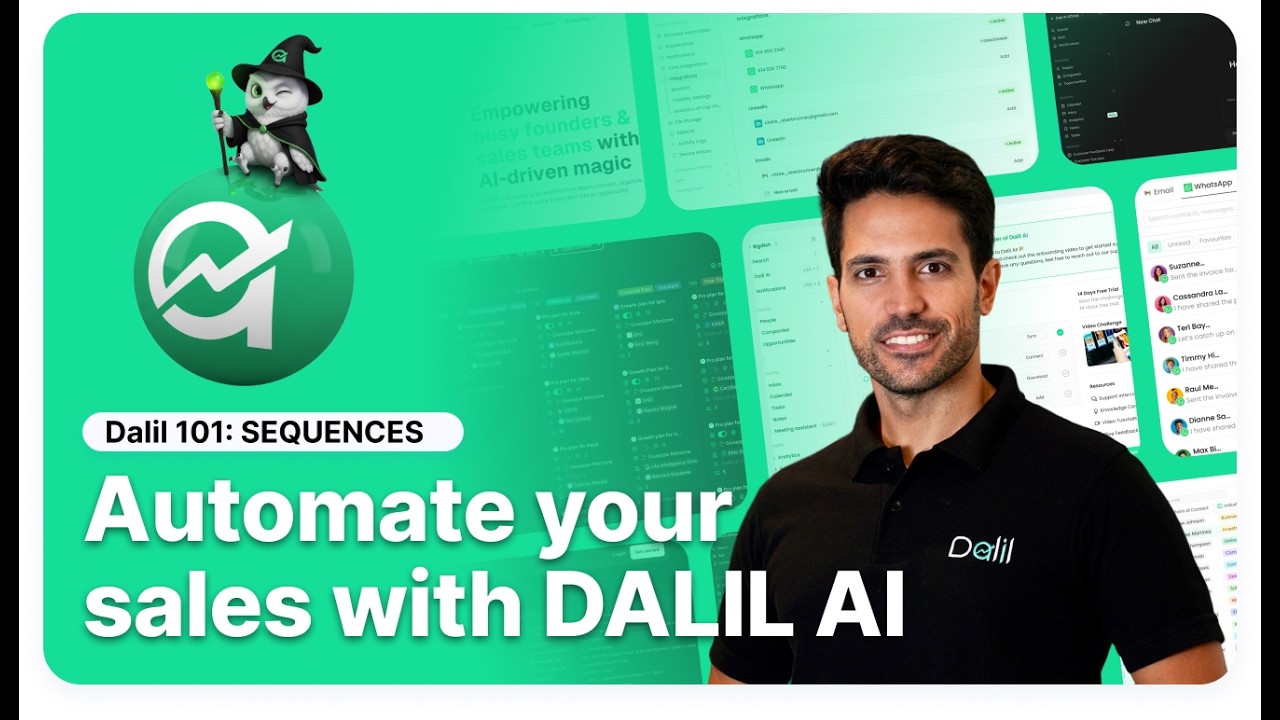
How to Automate Outreach Without Losing Personalisation
Automation and personalization are not opposites. The teams that treat them that way end up with one of two failure modes: manual processes that don't scale, or automated sequences that read like they were written for nobody in particular.
The resolution is understanding which parts of outreach should be automated and which shouldn't. Timing, sequencing, channel coordination, follow-up triggers, and CRM updates are all good candidates for automation. The actual message, specifically the part that references something specific to the prospect, is not.
A workable model: automate the delivery and tracking infrastructure, but treat the first line of every message as a personalization slot. That first line should reference something real, something from the prospect's LinkedIn activity in the last two weeks, a specific challenge in their industry right now, a recent hire or funding announcement, a post they wrote. The rest of the message can be templated. That first line cannot.
This is where enrichment matters. If every lead entering your sequence is already tagged with their industry, company size, recent activity, and ICP match, your reps have the raw material to write a genuinely personal first line without 30 minutes of research per lead. The automation handles the delivery. The enrichment handles the context. The rep handles the judgment about what to say.
One thing that's genuinely underrated: sequence pausing. The difference between a good automated sequence and an embarrassing one is whether the automation knows when to stop. If a prospect replies and your sequence continues sending follow-ups as if they never did, you've just demonstrated that your outreach is fully automated and you weren't paying attention. Any outreach automation worth using pauses the sequence automatically on reply and hands the thread back to a human.
WhatsApp as a Sales Outreach Channel
WhatsApp is the most underused channel in B2B outreach for teams operating in North American and Northern European markets. Most outreach tooling doesn't support it natively, most reps aren't trained on it, and most sales managers assume it's too informal. All of that is true in certain contexts. In others, it's a significant advantage precisely because it's unexpected.
The channel works best in specific situations. When a prospect is in a market where WhatsApp is the primary professional communication tool, which includes most of the Middle East, Southern Europe, Southeast Asia, and Latin America, treating it as informal is a misread of the culture. In those markets, WhatsApp outreach is often more appropriate than a formal email sequence. When a prospect has given explicit permission (a business card at an event, a form submission that included their number), WhatsApp becomes a warm channel rather than a cold one. When you've already had a LinkedIn conversation and want to continue it more informally, WhatsApp can bridge the gap.
The rules for WhatsApp outreach are stricter than for email simply because the channel is more personal. Messages must be short, context-relevant, and clearly from a real person. Anything that reads like a mail-merge template in a WhatsApp message is immediately jarring. The format of the channel sets the expectation for conversational exchange, not broadcast communication.
On the automation side: yes, you can automate WhatsApp outreach sequences, including follow-ups and multi-step drips, but the trigger for pausing needs to be even more sensitive than on email. A prospect who receives an automated follow-up after already replying on WhatsApp will not forgive it the way they might on email. The channel's informality means the expectations are higher, not lower.
For teams that sell in markets where WhatsApp is dominant, building it properly into the outreach stack, with sequencing, CRM connection, and automatic pause-on-reply, changes what's possible. The unified inbox that connects WhatsApp, LinkedIn, and email into one view is what makes that coordination manageable without requiring reps to juggle three separate apps during every follow-up cycle.
FAQ Section
What is a sales cadence? A sales cadence is a structured sequence of outreach touchpoints, spread across specific time intervals and channels, that a rep follows when working a prospect from first contact to a response. It removes the guesswork from how often to follow up and which channel to use at each stage.
How many touchpoints should a sales cadence have? For cold B2B outreach, 8-12 touchpoints across 21-30 days is a reasonable starting point for most deals above $10K in deal value. Shorter for high-velocity, transactional sales. Longer for enterprise deals with multi-stakeholder buying. What matters more than the exact number is that each touch has a distinct angle rather than repeating the same message with a different subject line.
Can you automate WhatsApp for sales outreach? Yes. You can build automated WhatsApp sequences that include timed follow-ups, conditional branching, and CRM-connected tracking. The critical requirement is that the sequence pauses automatically when a prospect replies. In a channel as personal as WhatsApp, a follow-up sent after a reply lands much worse than it would on email. Some platforms, including Dalil's WhatsApp Sequences, handle this natively without requiring the Meta Business API.
What is the best channel for B2B outreach? Honestly, there is no single best channel. Email reaches the most people but competes for attention in the most crowded inbox. LinkedIn offers context and professional legitimacy. WhatsApp drives higher open rates in the right markets and audiences. Phone has the highest conversion rate per conversation but the lowest scalability. The right answer depends on where your specific buyers pay professional attention, which is why multichannel coordination generally outperforms optimization of any one channel alone.
What is the average reply rate for multichannel vs single-channel outreach? Benchmarks vary widely by industry, audience, and message quality, so treat any specific number with skepticism. The directional finding is consistent: multichannel sequences produce meaningfully higher reply rates than single-channel approaches across most B2B contexts. Dalil's own data shows 4x more replies on hyper-personalized multichannel sequences compared to generic single-channel outreach. The gap comes from two sources: channel reach, since you're not betting everything on one inbox, and reinforcement, since a prospect who's seen you on two channels is more likely to respond on the third.
More from the blog
CRM Strategy: What It Is and How to Build One for Your Sales Team
A practitioner's guide to building a CRM strategy that actually sticks, covering what it means, why most fail, and how to build one step by step for your sales team.
What Is Inbound Sales? A Complete Guide for B2B Teams
A practitioner's guide to inbound sales for B2B teams, covering how it works, how it differs from outbound, the four-stage process, and when each approach fits your motion.
What Is a Sales Script? How to Write One That Actually Works
A practical guide to sales scripts covering what they are, how to write one from scratch, common mistakes new reps make, and templates for cold calls and emails.