What Is Inbound Sales? A Complete Guide for B2B Teams
A practitioner's guide to inbound sales for B2B teams, covering how it works, how it differs from outbound, the four-stage process, and when each approach fits your motion.

What Is Inbound Sales? A Complete Guide for B2B Teams
Inbound Sales Defined
Inbound sales is a sales approach where the buyer initiates contact. They found you through a blog post, a referral, a LinkedIn post, a podcast, or a search result. They raised their hand. Your job is to respond to that signal and guide them toward a decision.
That's the core definition. But the way inbound sales actually works in practice is more nuanced than "wait for leads and close them."
The buyer who comes to you inbound has already done some research. They have a rough sense of what they need and why they might need you specifically. That changes the entire nature of the conversation. You're not persuading someone that a problem exists. You're helping someone who already knows they have a problem figure out whether your solution is the right fit. The starting point is fundamentally different from outbound, and so is the rep behavior required.
Inbound sales is also often misunderstood as a passive motion. It isn't. Yes, the lead generation happens upstream through marketing, content, SEO, or product-led growth. But once a lead comes in, the sales work is active. Responding fast, qualifying accurately, and running a structured discovery process matters just as much in inbound as it does in outbound. The difference is in where the relationship starts, not in how much effort the sales team puts in after that.
For B2B teams specifically, inbound sales tends to produce leads with higher intent than equivalent outbound efforts, but lower volume. That tradeoff shapes everything from how you staff your team to how you measure success.
Inbound vs Outbound Sales: Key Differences
The cleanest way to understand what are B2B sales motions at a high level is to compare where the first move comes from.
In outbound, the rep initiates. They identify a target, research the company, write a message, and send it without knowing whether the prospect has any awareness of or interest in the product. What is sales outreach in an outbound context? It's a bet. You're betting that your targeting is good enough that enough of those cold contacts will eventually become warm conversations.
In inbound, the prospect initiates. Something they encountered (your content, a peer recommendation, a search result) generated enough interest that they took an action: filled out a form, booked a demo, signed up for a trial, sent a LinkedIn message. The sales conversation starts from a position of established awareness.
The practical differences compound from there:
| Inbound | Outbound | |
|---|---|---|
| Who starts the conversation | The prospect | The rep |
| Lead volume | Lower | Higher |
| Lead intent | Higher | Lower |
| Primary challenge | Speed and qualification | Personalization and persistence |
| Rep's starting position | Known product, identified pain | Cold, unverified fit |
| Time to first conversation | Minutes to hours | Days to weeks |
Neither is inherently better. Most teams that close consistently run both. The inbound vs outbound sales question is really about which motion fits your current stage, your market, and your team's capacity.
One thing to call out: the lines blur constantly in practice. A prospect might find you through a LinkedIn post (inbound signal), then get added to an outbound sequence by a rep who spotted them engaging with content. A cold email that prompts someone to book a demo is outbound generating an inbound action. In mature GTM operations, the two motions feed each other deliberately. Treating them as mutually exclusive is a mistake.
How Inbound Sales Works in B2B
The mechanics of inbound sales in a B2B context run on a handoff between marketing and sales. Marketing creates the conditions for leads to arrive. Sales takes it from there.
The handoff moment matters more than most teams admit. Roughly 90% of companies have no genuinely connected system between marketing and sales. Marketing runs campaigns that sales doesn't know about. Sales has conversations that marketing never sees. The result: a lead replies to a LinkedIn ad, gets exported to a CRM that loses the channel context, waits three days for follow-up, and eventually receives a cold email as if it's the first touch. That's not an inbound sales process. That's a lead generation program with an outbound response bolted on.
When inbound sales works well in B2B, here's what the process actually looks like. A lead comes in through a website form, a content download, or a free trial signup. Within minutes, an assigned rep gets notified with context on the lead: company size, industry, what they engaged with, any enrichment data available. The rep reviews that context before picking up the phone or sending the first message. The opening conversation is already personalized because the rep knows what the lead came through. Discovery is focused because the lead has already demonstrated a problem area by what they engaged with.
The B2B inbound sales cycle tends to be shorter than cold outbound when the qualification is right, because you're not spending the first several touches just establishing credibility and problem awareness. That's already partly done. Where reps lose inbound deals is in moving too fast, skipping discovery because the lead seems interested, and presenting a solution before they've confirmed the full picture of what the buyer actually needs.
The Inbound Sales Process Step by Step
Most inbound sales methodologies break the process into four stages. These aren't unique to any single framework. You'll see variations of them across most modern sales training. What matters is understanding what actually happens at each stage.
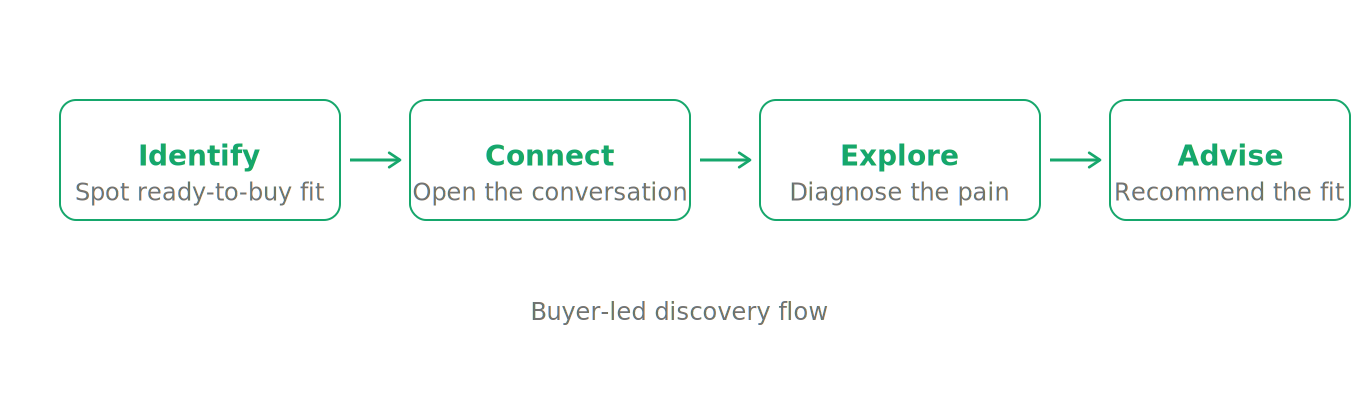
Stage 1: Identify. Not every inbound lead is worth pursuing. Before anything else, you're sorting: who fits your ICP, who has the authority or influence to buy, and who has a real problem your product solves. Inbound volume is lower than outbound, so this step can feel unnecessary, but skipping it means your reps spend time on demos that were never going to convert. A clean qualification step protects your pipeline quality.
Stage 2: Connect. Speed matters here more than almost anywhere else in B2B sales. Response time to inbound leads drops conversion probability sharply after the first hour. The connect stage is your first outreach. It's a call, a short email, or a message on whatever channel the lead used to reach you. The goal is not to sell. It's to confirm the lead is real, set expectations, and earn the right to a proper conversation.
Stage 3: Explore. This is discovery. It's where most inbound sales reps underinvest because the lead seems warm and they're eager to pitch. Resist that. An inbound lead who filled out a form still needs you to understand their specific situation: what triggered the search, what they've tried before, what success looks like for them, who else is involved in the decision. The answers you get here are what make the next stage work.
Stage 4: Advise. This is where you present, but not by reciting a feature list. You're building the recommendation around what you learned in Stage 3. You're connecting their stated situation to specific capabilities, addressing objections before they surface, and making the case for why this solution fits their problem better than the alternatives. Done well, this stage feels less like a sales pitch and more like a consultant summarizing their findings.
The flow isn't always linear. Deals stall. Leads go quiet. New stakeholders appear in Stage 3. But having the stages mapped gives reps a clear answer to "where are we and what's the next move" at any point in the process.
When to Use Inbound vs Outbound for Your Team
This is where the advice gets more opinionated, because it needs to be.
If your team is early-stage and you haven't built content, SEO, or a referral network yet, you cannot rely on inbound. Not because inbound is wrong, but because inbound requires an upstream asset to generate the leads in the first place. Those assets take time. While you're building them, outbound is how you put food on the table. Founders running GTM foundation motions almost always need to lead with outbound in the first 6-12 months.
If you're a team of 10 or more with a product that generates organic demand (people are already searching for what you do, or you've built content that ranks), inbound becomes a force multiplier. The cost per lead is lower over time, and the leads close faster because intent is already established. The investment required is in making the inbound motion structured: fast response systems, clear qualification criteria, and a consistent discovery process so warm leads don't get wasted.
Honestly, the teams that scale most efficiently combine both. They run outbound to fill pipeline during the months content isn't generating enough volume. They build inbound assets in parallel so that over time, the ratio shifts. Neither motion is abandoned; the balance just evolves.
One thing that gets underestimated: most pipeline stalls not because leads don't come in, but because follow-up breaks down after the first touch. This applies to inbound just as much as outbound. An interested buyer who books a demo and then doesn't hear back for four days is not going to become a customer. The rep who thinks "they came to us, so they're motivated" and then relaxes on follow-up is making an expensive assumption. Buyers are busy. They forget. They get pulled into other priorities. You need to follow up regardless of how warm the lead was when they first arrived.
If your product genuinely helps people and you stop following up because you don't want to feel pushy, you're not being respectful. You're letting good-fit buyers slip because you didn't stay in the conversation long enough.
Teams scaling past the early stage should also think carefully about their tooling here. A unified inbox that brings WhatsApp, LinkedIn, and email conversations into one place becomes critical when inbound arrives across multiple channels simultaneously. Leads don't all come through the same door. Managing them across disconnected inboxes is where inbound operations quietly break down.
FAQ Section
What is the difference between inbound and outbound sales? Inbound sales starts when the prospect reaches out to you. It might be through a form, a demo booking, a referral, or any other signal that they're already aware of and interested in what you offer. Outbound sales starts when a rep initiates contact with a prospect who hasn't expressed prior interest. The core distinction is who makes the first move, which changes the intent level of the lead and the approach the rep needs to take.
Is inbound sales the same as marketing? No. Marketing creates the conditions that generate inbound leads: content, ads, SEO, events, referrals. Inbound sales is what happens after a lead arrives: the qualification, discovery, and closing work that converts that interest into a deal. The two functions are closely linked and should share data, but they're distinct roles with different skills and different metrics.
How do small B2B teams get started with inbound sales? Start by picking one or two channels where your buyers actually spend time. LinkedIn, search, or a specific community all work. Build one piece of content or one referral mechanism that generates a small, steady stream of leads. Then build the response process first: how fast will you follow up, who owns inbound leads, and what does the first conversation look like. Most small teams get this backwards and build the content machine before they have a system to handle what comes in.
What tools do inbound sales teams use? The core stack for inbound sales covers CRM (to track leads and deal progress), a communication tool that handles the channels your buyers use (email, LinkedIn, WhatsApp depending on market), and some form of lead enrichment so reps go into conversations with context already loaded. The specific tools matter less than whether they're connected. A CRM that doesn't know what happened on LinkedIn, or an inbox that doesn't update the deal record automatically, creates the handoff gaps where inbound leads go cold. Platforms like Dalil are built around solving exactly that problem: keeping conversation context, CRM records, and outreach sequences in one place rather than spread across four disconnected tools.
More from the blog
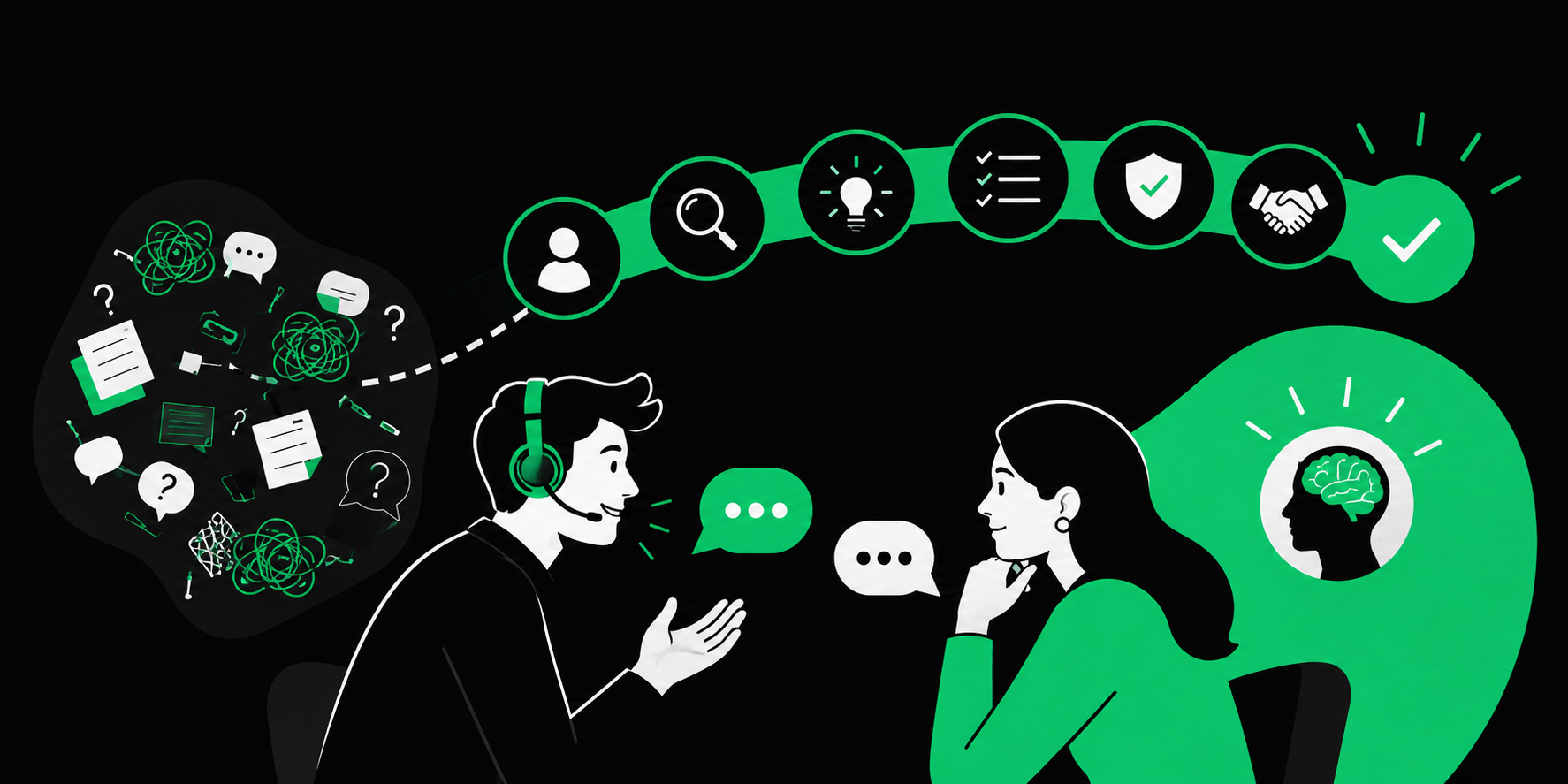
What Is a Sales Script? How to Write One That Actually Works
A practical guide to sales scripts covering what they are, how to write one from scratch, common mistakes new reps make, and templates for cold calls and emails.
Dalil AI vs Close CRM: the best phone dialer that never learned LinkedIn
Close CRM has the best built-in dialer in the SMB market. But in 2026, your prospects aren't picking up their phones — they're on LinkedIn and WhatsApp. Here's the honest breakdown.
Dalil AI vs HubSpot: when "can do everything" costs everything
HubSpot can do almost anything; with the right integrations, consultants, and months of setup. Here's the honest cost of building the full stack vs Dalil AI out of the box.